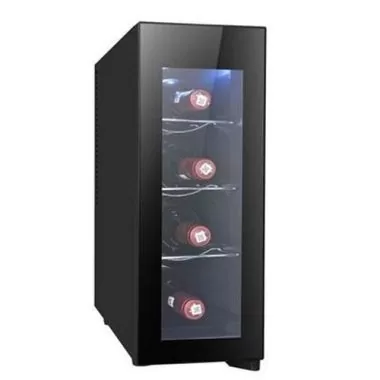
Discover the Benefits of RCA RFRW041 Wine Cooler
Discovering the Benefits of the RCA RFRW041 Wine Cooler The Perfect Addition to Your Collection: The RCA RFRW041 Wine Cooler

The effortless grace of reaching for that perfect Pinot Grigio while reducing your seafood sauce, no cellar trip interrupting your cooking flow, no guest left unattended while you retrieve entertainment wines. This is the sophisticated convenience countertop wine cellars deliver—professional temperature precision at your fingertips, transforming kitchen workflow while elevating entertaining capability through seamless wine access.
Unlike basement cellars demanding departure from cooking or guests, countertop wine cellars position 6-18 perfectly-chilled bottles within arm’s reach: cooking whites at 45°F for deglazing pan sauces, entertaining reds at 60°F for immediate service, sparkling wines at optimal 42°F for celebrations. All while maintaining the aesthetic sophistication your kitchen deserves, the temperature precision your wine demands, and the host presence your guests appreciate.
Best countertop wine cellars for 2025: Antarctic Star 12-bottle ($180-250) for maximum countertop capacity, Koolatron 10-bottle ($150-200) for mid-range convenience, Koolatron 6-bottle ($100-150) for ultra-compact placement. These space-efficient models deliver professional temperature control (41-64°F range) in footprints under 18″ width.
Countertop advantages: Immediate access eliminating workflow interruption (5 seconds vs 60+ seconds cellar trip), host presence maintained during entertaining, cooking integration for culinary wine applications, minimal space requirements (1.5-2.5 square feet), visual sophistication improving kitchen aesthetics.
Critical factors: Counter space availability, capacity matching usage patterns (6 bottles cooking, 12+ entertaining), cooling technology (thermoelectric silence vs compressor performance), heat source proximity (24″ minimum from ranges/ovens), aesthetic integration with existing appliances.
We have tested countertop wine cellar integrations across three decades of kitchen installations, from compact galley kitchens to expansive butler’s pantries. Our recommendations prioritize workflow optimization verified through cooking applications, temperature stability assessed during high-heat cooking environments, and aesthetic integration in visible kitchen placements where countertop wine storage becomes functional sculpture.
Compact luxury positioning: 2025 countertop models feature premium finishes (brushed stainless, matte black) matching high-end appliance aesthetics. Antarctic Star and Koolatron lead residential countertop design evolution with sophisticated visual integration.
| Model | Brand | Capacity | Dimensions (W×D×H) | Price Range | WCD Rating | Best For |
|---|---|---|---|---|---|---|
| Antarctic Star 12-Bottle | Antarctic Star | 12 bottles | 15″ × 20.5″ × 18.9″ | $130-160 | 7.8/10 | Maximum capacity countertop integration with proven reliability and kitchen-friendly silence |
| Koolatron 10-Bottle | Koolatron | 10 bottles | 11.9″ × 19.7″ × 18.1″ | $140-180 | 7.2/10 | Balanced capacity-footprint ratio for serious cooking wine selection plus entertainment bottles |
| Magic Chef 6-Bottle | Magic Chef | 6 bottles | 10.2″ × 18″ × 17″ | $80-110 | 6.5/10 | Budget-conscious cooking-focused placement prioritizing space efficiency over capacity |
| Koolatron 6-Bottle Ultra | Koolatron | 6 bottles | 10″ × 18″ × 17″ | $100-130 | 7.0/10 | Ultra-compact professional wine storage in smallest possible countertop footprint |
Countertop Performance Standards: Ratings (6.5-7.8/10) reflect countertop-specific requirements: compact footprint efficiency (10-15″ width fitting standard counter spaces), thermoelectric silence (<25dB preserving kitchen ambiance), heat tolerance (maintaining performance near cooking appliances), and visual integration matching high-end kitchen aesthetics. Antarctic Star leads category with superior capacity-per-square-inch and proven 5-8 year reliability justifying mid-range investment.
Editor Assessment: Best maximum-capacity countertop integration
The Antarctic Star 12-bottle compact delivers maximum wine access within minimal counter footprint. Thermoelectric cooling maintains 41-61°F range with whisper-quiet 23dB operation—ideal for open-concept kitchens where silence matters.
Why it dominates countertop category: 15″ width fits standard counter spaces, 12-bottle capacity serves both cooking and entertaining needs, silent operation preserves kitchen ambiance, double-pane glass withstands kitchen heat exposure.
Technical specifications: 12 bottles, 41-61°F range, thermoelectric (23dB), 15″ W × 20.5″ D × 18.9″ H, 80W consumption, reversible door.
Editor Assessment: Best balanced capacity and footprint
The Koolatron 10-bottle thermoelectric provides optimal balance between wine capacity and counter space consumption. Perfect for serious home cooks maintaining cooking wine selection plus entertainment bottles.
Technical specifications: 10 bottles, 44-64°F range, thermoelectric (22dB), 11.9″ W × 19.7″ D × 18.1″ H, 70W, ultra-compact footprint.
Editor Assessment: Best ultra-compact cooking wine access
The Koolatron 6-bottle ultra-compact delivers professional wine storage in smallest possible countertop footprint. Ideal for cooking-focused applications where space is premium.
Technical specifications: 6 bottles, 46-64°F range, thermoelectric (21dB), 10″ W × 18″ D × 17″ H, 65W, smallest footprint available.
The trap: Installing countertop wine cellar next to range or oven to maximize cooking convenience.
Reality: Heat from cooking degrades cooling performance. Thermoelectric units lose 30-40% efficiency when ambient exceeds 80°F. Maintain 24″ minimum from heat sources.
Value proposition: Countertop wine coolers worth investment for home cooks using wine in cooking regularly, entertainers prioritizing host presence over cellar trips, and compact kitchens lacking space for full-size cellars.
Cost-benefit: Entry models $100-150 prevent wine spoilage from refrigerator storage ($200-400 annual waste), provide immediate cooking access improving workflow, maintain entertaining sophistication. ROI achieved within 6-12 months for regular wine users.
Thermal performance reality: Countertop wine coolers face unique challenges from kitchen ambient temperatures (75-85°F during cooking) and heat sources (range, oven, dishwasher proximity). Compressor-based models maintain temperature stability in 40-90°F environments, while thermoelectric units struggle above 80°F ambient.
Placement recommendations: Position countertop coolers minimum 12 inches from range surfaces, 18+ inches from wall ovens, and away from direct sunlight through windows. Under-counter placement adjacent to base cabinets provides natural heat shielding versus exposed island countertop positioning.
Cooling technology consideration: Kitchen placements demand compressor wine coolers over thermoelectric alternatives. Antarctic Star 12-bottle compressor countertop model ($130-160) maintains unwavering temperature precision during Thanksgiving dinner preparation, while thermoelectric equivalents struggle maintaining 55°F targets when kitchen ambient exceeds 82°F.
Capacity range: Countertop wine coolers typically accommodate 6-18 bottles, limited by dimensional constraints fitting standard counter depths (18-22 inches) and widths minimizing valuable prep space consumption (10-17 inches).
6-bottle models: Ultra-compact 10″ × 15″ footprints (Koolatron, Antarctic Star 6-bottle) ideal for minimal-capacity cooking wine rotation, dressing suite champagne service, or office executive refreshment. Price range $100-140.
12-bottle models: Optimal countertop balance at 15″ × 20″ footprints delivering serious wine storage without dominating counter real estate. Antarctic Star 12-bottle thermoelectric ($130-160) represents category sweet spot for most countertop applications.
18-bottle models: Maximum countertop capacity at 17″ × 22″ footprints approaching small freestanding dimensions. Consider whether freestanding floor placement provides better space optimization for larger capacities.
Noise level analysis: Thermoelectric countertop models operate whisper-quiet (<23-25dB), comparable to library ambiance and imperceptible during normal kitchen activity. Compressor countertop units generate 35-40dB operational noise—noticeable during quiet cooking but acceptable during typical kitchen workflow.
Open concept considerations: For kitchens open to living/dining areas where silence matters during entertaining, thermoelectric technology provides acoustic advantages. Antarctic Star 12-bottle thermoelectric delivers <23dB operation compatible with dinner conversation 10 feet away.
Enclosed kitchen reality: Standard kitchens with walls separating living spaces accommodate compressor noise without disturbance. Dishwasher operation (45-50dB), range hood use (50-65dB), and normal kitchen activity (40-60dB) exceed wine cooler compressor noise, making acoustic performance irrelevant consideration for enclosed kitchen placements.
Energy consumption: Countertop wine coolers consume 60-120 kWh annually depending on capacity and cooling technology, representing $9-18 annual operating cost at average US electricity rates ($0.15/kWh). Thermoelectric models consume 80-120 kWh (higher per-bottle than compressor), while compressor alternatives deliver 60-90 kWh superior efficiency.
Comparative perspective: Countertop wine cooler energy use equals 20-30% of household refrigerator consumption (300-400 kWh annually), making dedicated wine storage dramatically more efficient than repurposing refrigerator space or room-temperature wine degradation requiring premature replacement.
Efficiency optimization: Placement away from heat sources (range, dishwasher, windows) reduces compressor runtime by 20-30%. Minimize door openings during cooking—each access introduces warm air requiring 15-25 minutes temperature recovery. Set temperature to actual wine storage needs (58°F reds, 48°F whites) rather than excessive cooling wasting energy.
Single-zone reality: Most countertop models feature single-zone cooling maintaining one temperature throughout interior. Storing both red and white wines requires compromise temperature selection (typically 55°F)—cooler than red ideal (58-62°F), warmer than white optimal (46-50°F).
Practical solutions: For cooking wine rotation, 55°F compromise works well—whites slightly warm but acceptable for culinary use, reds slightly cool but serviceable for reductions and sauces. For serving wine, refrigerate whites additional 15-20 minutes before service, allow reds to warm 10-15 minutes at room temperature.
Dual-zone countertop consideration: Antarctic Star offers 18-bottle dual-zone countertop-compatible models (17.7″ width) providing independent red/white temperature zones, though larger footprint demands significant counter space commitment. Evaluate whether dual-zone justifies counter real estate consumption versus single-zone + refrigerator flexibility.
Space efficiency analysis: Small kitchens demand maximum capacity within minimal footprint. Antarctic Star 12-bottle thermoelectric (15″ × 20.5″ × 18.9″, $130-160) delivers best countertop capacity-per-square-foot ratio while maintaining compact dimensions fitting standard counter depths.
Ultra-compact alternative: Extreme space constraints justify Koolatron 6-bottle (10″ × 17″ × 20.5″, $100-130) sacrificing capacity for minimal footprint. Perfect for efficiency apartments, RVs, or office countertops where every inch matters.
Vertical optimization consideration: Small kitchens often possess vertical space unavailable for countertop placement. Consider compact freestanding wine cellars utilizing vertical footprints (15″ × 20″ × 27-34″ tall) delivering 18-24 bottle capacity within sub-3 square foot floor space—superior space efficiency versus countertop horizontal consumption.
Installation warning: Standard countertop wine coolers use rear and side ventilation designs requiring open space for heat dissipation. Installing standard countertop models in enclosed cabinets causes compressor overheating, thermal shutdown, and premature failure.
Built-in alternative: Only wine coolers specifically engineered for built-in installation with front-venting designs should be installed in cabinetry. These models (EdgeStar, Kalamera, Wine Enthusiast built-in series) feature front grilles exhausting heat and withstand enclosed cabinet thermal constraints. Expect 40-50% premium over countertop equivalents.
Countertop advantage preservation: The primary benefit of countertop wine coolers is installation flexibility—placing units wherever cooking workflow demands without cabinet modification. If permanent built-in integration is desired, invest in purpose-designed under-counter wine coolers engineered for enclosed installations rather than attempting to retrofit countertop models into inappropriate applications.
Join home chefs and sophisticated entertainers who refuse to compromise wine access for convenience.
Explore our complete wine cellar reviews for detailed countertop and full-size analysis.
There is a particular satisfaction in cooking with wine stored at proper temperature, within arm’s reach as reduction sauce demands immediate addition. No interrupting your sauté to retrieve bottles from basement cellars. No leaving guests mid-conversation to select entertainment wines from distant storage.
Countertop wine storage represents the sophisticated cook secret weapon—professional temperature control meeting culinary workflow optimization. Whether it is a compact 6-bottle cooking companion or a 12-bottle entertaining centerpiece, countertop cellars deliver the convenience modern kitchens demand with the wine preservation quality your collection deserves.
Because great cooking and great entertaining both demand wine at your fingertips.
See exactly when a higher-quality wine cooler pays for itself through wine protection, energy savings, and longevity. Calculate your 5-year total cost of ownership.
Compare multiple models side-by-side with specs that matter to you. Build your custom comparison chart.
Not sure if dual-zone is worth the investment? Get a personalized recommendation based on your collection mix and serving habits.
Prevent the “too small in 6 months” problem. Calculate your ideal capacity based on bottle mix, growth plans, and entertaining frequency.
Discovering the Benefits of the RCA RFRW041 Wine Cooler The Perfect Addition to Your Collection: The RCA RFRW041 Wine Cooler

Better Wine with the Nutrichef PKTEWC120 Wine Cooler The Importance of Proper Wine Storage Wine is more than just a

Introduction The Antarctic Star 5846 Wine Fridge: A Comprehensive Review Say goodbye to warm drinks and hello to perfect refreshment.

AKDY AK-WC0070 20-Bottle Compressor Wine Cooler with Open Bottle Storage While some wine drinkers are happy placing their reds, whites,

NutriChef PKTEWC16 Stainless Steel Thermoelectric Wine Cooler Review Welcome to the Wine cellar Diva review of the [amazon link=”B07J55PCZR” tracking_id=”wcd01-20″

Welcome to the Wine cellar Diva review of the 18 Bottle Stainless Steel Dual Zone Thermoelectric Wine Cooler Looking to