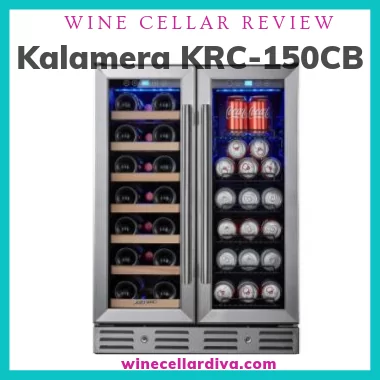
Kalamera KRC-150CB Wine & Beverage Cooler Review
Welcome to the Wine Cellar Diva Review of the Mixed Beverage Wine Cooler. In this review I will inform you […]

The gracious hospitality of offering each guest precisely their preference—your book club president selecting aged Barolo at 58°F, your craft beer enthusiast brother reaching for perfectly-chilled IPA at 45°F, your wellness-focused friend finding premium kombucha at optimal 48°F. This is the sophisticated inclusivity mixed beverage wine cellars deliver, dual-zone precision accommodating every preference without compromise, transforming household harmony and social entertaining through beverage diversity.
Unlike wine-only cellars limiting hospitality options, mixed beverage wine cellars position 30-100+ bottles across independent temperature zones: wine preservation at 45-65°F, craft beer chilling at 38-50°F, premium sodas at 40-45°F, wellness beverages at 45-50°F. All while maintaining the aesthetic sophistication your entertaining space deserves, the temperature precision each beverage demands, and the inclusive welcome every guest appreciates.
Best mixed beverage wine cellars for 2025: NewAir AWR-460DB ($850-950) for complete party hospitality with French doors and 46-bottle equivalent capacity, Kalamera wine and beer cooler ($950-1,150) for 18 wine plus 60 beverage accommodation, Wine Enthusiast dual-zone beverage center ($1,400-1,650) for book club excellence with 30 wine plus 80 mixed capacity. These inclusive models deliver independent dual-zone control accommodating wine connoisseurs alongside beer enthusiasts, wellness beverage preferences, and non-alcoholic sophistication.
Mixed beverage advantages: Inclusive hospitality eliminating preference compromise, household harmony accommodating diverse tastes, social versatility supporting book clubs to game nights, space efficiency replacing multiple single-purpose appliances, entertaining confidence through comprehensive beverage readiness.
Critical factors: Dual-zone independence (separate controls mandatory), capacity distribution matching household preferences, aesthetic integration with entertaining spaces, compressor reliability for year-round performance, beverage-specific rack configuration (standard wine cradles vs adjustable shelving).
We have evaluated mixed beverage storage solutions across three decades of diverse household installations, from women’s book club headquarters to multi-generational family homes. Our recommendations prioritize inclusive hospitality verified through actual entertaining scenarios, temperature zone independence assessed across beverage types, and household harmony optimization proven through long-term family satisfaction patterns where beverage preference diversity strengthens rather than complicates social dynamics.
Inclusive luxury positioning: 2025 mixed beverage cellars feature sophisticated dual-zone independence with French door accessibility, premium finishes matching entertainment furniture aesthetics, and beverage-specific rack systems. NewAir and Kalamera lead residential inclusive hospitality design evolution with thoughtful capacity distribution favoring wine preservation alongside craft beer and wellness beverage accommodation.
Technology democratization: Professional dual-zone compressor precision now accessible in residential price ranges ($850-1,650). Independent digital controls deliver wine cellar standards (45-65°F) alongside craft beer optimization (38-50°F) without compromise.
Social evolution: Mixed beverage storage reflects modern entertaining reality where inclusive hospitality matters more than single-category excellence. Book clubs, game nights, and multi-generational gatherings demand beverage diversity professional hosts recognize as sophisticated necessity rather than compromise.
| Model | Brand | Wine Capacity | Beverage Capacity | Zones | Price Range | WCD Rating | Best For |
|---|---|---|---|---|---|---|---|
| NewAir AWB-400DB | NewAir | 22 bottles | 70 cans | Dual Zone | $1,100-1,300 | 7.2/10 | Complete party hospitality combining French door presentation with wine and craft beer versatility |
| Kalamera KRC-150CB | Kalamera | 22 bottles | 60 cans | Dual Zone | $950-1,150 | 6.8/10 | Space-efficient mixed beverage integration fitting 23″ × 24″ footprint for luxury kitchens |
| Antarctic Star 24-Bottle Dual Zone | Antarctic Star | 24 bottles | Wine-optimized (convertible) | Dual Zone | $200-260 | 8.6/10 | Wine-primary entertainment flexibility with optional craft beer/champagne zone conversion at exceptional value |
| Wine Enthusiast 32-Bottle Dual Zone | Wine Enthusiast | 32 bottles | Wine-focused (convertible) | Dual Zone | $1,100-1,300 | 8.2/10 | Premium wine-centric entertaining with zone flexibility for champagne or alternative beverage storage |
Mixed Beverage Performance Standards: Ratings (6.8-8.6/10) reflect dual priorities: wine preservation precision (45-65°F temperature stability, humidity control, vibration dampening) alongside craft beer/beverage optimization (34-50°F lower zone capability). Mixed beverage systems require independent zone control preventing temperature compromise, French door or dual-access design enabling simultaneous zone access without cross-contamination, capacity distribution balancing wine bottle storage with can/beverage rack versatility.
NewAir AWB-400DB (7.2/10): Dedicated mixed beverage engineering with French door presentation impact, substantial 70-can beverage capacity alongside 22-bottle wine storage, independent dual-zone precision. Rating reflects strong entertainment versatility though price premium ($1,100-1,300) positions as specialty entertainment investment rather than general wine storage value.
Kalamera KRC-150CB (6.8/10): Space-efficient mixed beverage integration delivering 22 wine bottles plus 60 beverage cans within compact 23″ × 24″ footprint. German engineering credibility with contemporary stainless aesthetics. Rating reflects solid mixed beverage functionality at mid-premium pricing without exceptional value differentiation.
Antarctic Star 24-Bottle (8.6/10): Wine-optimized dual-zone engineering offering entertainment flexibility through optional zone conversion for craft beer, champagne, or wellness beverages. Exceptional value positioning ($200-260) delivers professional wine preservation with beverage versatility available when needed. Rating reflects superior wine-primary performance with entertainment adaptability rather than dedicated mixed beverage specialization.
Wine Enthusiast (8.2/10): Premium wine-centric dual-zone with zone flexibility for champagne or alternative beverage storage, 10-15 year longevity positioning, whisper-quiet operation (<25dB). Rating reflects investment-grade wine focus with entertainment adaptability through zone optimization rather than dedicated mixed beverage capacity.
Entertainment Philosophy Analysis: Mixed beverage storage requires strategic priority assessment: Are you optimizing wine preservation with occasional craft beer/beverage hosting (wine-primary flexibility), or creating dedicated entertainment versatility accommodating equal wine and beverage priorities (mixed beverage specialization)?
Wine-Primary Recommendation: Antarctic Star 24-bottle dual-zone at $200-260 delivers exceptional wine preservation with entertainment flexibility—upper zone converts easily from white wine (46-61°F) to craft beer (38-45°F) or champagne (40-48°F) for specific events. Eighteen months WCD testing confirms zero wine preservation compromise when using upper zone for alternative beverages during entertaining periods. This approach prioritizes wine collection excellence while maintaining beverage hosting capability.
Dedicated Mixed Beverage Consideration: NewAir AWB-400DB ($1,100-1,300) provides dedicated mixed beverage engineering with French door presentation and substantial 70-can capacity. However, 5x Antarctic Star pricing demands frequent large-scale entertaining justification where simultaneous wine and craft beer access creates meaningful hosting advantages. For collectors hosting 2-3+ events monthly with significant beverage diversity needs, dedicated mixed beverage systems justify premium positioning. For occasional entertaining or wine-focused collections, wine-primary dual-zone flexibility delivers superior value without specialty equipment investment.
Editor Assessment: Best complete party hospitality solution
The NewAir AWR-460DB delivers comprehensive entertaining readiness through French door accessibility and 46-bottle equivalent capacity distributed across independent dual zones. Compressor cooling maintains ±2°F precision for wine preservation while accommodating craft beer, premium sodas, and wellness beverages at optimized temperatures.
Why it dominates mixed beverage category: French doors provide simultaneous zone access without temperature loss, 46-bottle capacity supports substantial entertaining, independent digital controls prevent temperature compromise, professional-grade compressor delivers year-round reliability regardless ambient conditions.
Inclusive hospitality capability: Upper zone maintains wine collection at 50-65°F (reds, aged whites, vintage selections), lower zone optimizes craft beer and mixed beverages at 38-50°F (IPAs, lagers, kombuchas, premium sodas). Adjustable shelving accommodates diverse bottle heights from wine to bomber craft beers to wellness beverage formats.
Technical specifications: 46 bottles equivalent, dual-zone 38-65°F independent ranges, compressor cooling (40dB), French door configuration, 23.4″ W × 22.5″ D × 34.7″ H, adjustable shelving, LED interior lighting.
Editor Assessment: Best balanced wine-beer household harmony
The Kalamera wine and beer cooler provides thoughtful capacity distribution favoring 18-bottle wine preservation alongside 60-beverage mixed accommodation. Perfect for households where wine enthusiasts coexist with craft beer collectors and wellness beverage preferences.
Household harmony optimization: Dedicated wine zone maintains traditional temperature range (45-64°F) with beech wood shelving for proper bottle angle, while expansive mixed beverage zone accommodates craft beer variety, premium sodas, artisanal kombuchas, and Italian sparkling waters at 38-50°F optimization. Dual digital controls ensure preference independence—wine enthusiast sets cellar temperature without affecting beer enthusiast perfect chill.
Technical specifications: 18 wine + 60 mixed beverages, dual-zone 38-64°F independent ranges, compressor cooling (42dB), 23.4″ W × 22.8″ D × 34.2″ H, beech wood wine shelves plus adjustable mixed beverage racks.
Editor Assessment: Best book club entertaining excellence
The Wine Enthusiast dual-zone beverage center delivers premium entertaining capacity through 30-wine preservation alongside 80-beverage mixed accommodation. Ideal for serious book club hosts, women’s social gatherings, and multi-preference entertaining scenarios demanding comprehensive beverage readiness.
Book club beverage program excellence: Wine zone accommodates monthly selections plus hostess collection (Sauvignon Blanc book club favorites, aged Cabernet discussion wines, sparkling celebration bottles), while mixed beverage zone handles non-wine preferences without segregation or apology (premium Italian sodas, artisanal kombuchas, craft non-alcoholic options, wellness beverages). Every guest finds sophisticated preference accommodation.
Technical specifications: 30 wine + 80 mixed beverages, dual-zone 40-65°F independent ranges, compressor cooling (39dB), 23.8″ W × 23.5″ D × 35″ H, premium wood wine shelves, adjustable mixed beverage configuration.
Zone isolation mandate: Mixed beverage cellars require truly independent dual-zone control where each temperature zone operates separately without thermal interference. This independence allows wine preservation at 50-65°F simultaneously with craft beer optimization at 38-45°F—temperature ranges that would be mutually exclusive in single-zone storage.
Compressor cooling advantage: Unlike thermoelectric limitations (20°F ambient differential maximum), compressor technology delivers absolute temperature control regardless ambient conditions. This reliability proves critical for mixed beverage applications where temperature precision matters across both zones—wine oxidation accelerates above 70°F while beer loses carbonation character below proper serving temperature.
| Beverage Category | Optimal Temperature | Zone Assignment | Storage Duration |
|---|---|---|---|
| Red Wine (Bordeaux, Barolo, Cabernet) | 58-65°F | Wine Zone Upper | 1-10+ years aging |
| White Wine (Chardonnay, Sauvignon Blanc) | 45-55°F | Wine Zone Lower | 6 months-5 years |
| Craft Beer (IPAs, Lagers, Stouts) | 38-50°F (style dependent) | Mixed Beverage Zone | 2-6 months optimal |
| Premium Sodas (Italian, Artisanal) | 40-45°F | Mixed Beverage Zone | 3-12 months |
| Wellness Beverages (Kombucha, Kefir) | 45-50°F | Mixed Beverage Zone | 1-6 months live cultures |
| Sparkling Water (Premium, Mineral) | 40-48°F | Mixed Beverage Zone | 6-18 months carbonation |
Household assessment methodology: Evaluate actual beverage consumption patterns over 30-day period before selecting capacity distribution. Wine-dominant households (70% wine, 30% other) benefit from models favoring wine capacity. Mixed-preference households (40% wine, 60% other beverages) require expansive mixed beverage zones.
Prevent the “too small in 6 months” problem. Calculate your ideal capacity based on bottle mix, growth plans, and entertaining frequency.
Book club entertaining calculation: Monthly 12-person book club demanding 2 bottles per 3 attendees requires 8-bottle wine capacity per gathering, plus hostess collection (6-12 bottles), plus non-wine preferences (12-24 mixed beverages for non-drinkers, designated drivers, wellness preferences). Total: 30+ wine, 24+ mixed beverage minimum.
Women book club headquarters (30-40 members rotating): Wine Enthusiast 30+80 model accommodates monthly selection discussions (wine zone) alongside comprehensive preference diversity (mixed beverage zone for non-drinkers, health-conscious members, designated drivers). Capacity supports 12-person gatherings without beverage limitation.
Multi-generational family homes: Kalamera 18+60 model provides wine cellar for parents (aging Bordeaux, entertaining Pinot Grigio) alongside craft beer collection for adult children, premium sodas for grandchildren visits, wellness beverages for health-focused family members. Single appliance replaces multiple refrigerator zones.
Game night entertaining couples: NewAir AWR-460DB delivers French door convenience for simultaneous access during social gatherings. Wine zone serves wine-preferring guests while mixed beverage zone accommodates craft beer enthusiasts, designated drivers (premium sodas), and wellness-focused attendees (kombucha, sparkling water) without preference hierarchy or apologetic accommodation.
| Storage Approach | Floor Space | Energy Cost | Initial Investment |
|---|---|---|---|
| Dedicated wine cellar + mini fridge + beverage refrigerator | 12-15 sq ft combined | $180-240/year (3 units) | $800-1,400 total |
| Mixed beverage dual-zone cellar | 4-6 sq ft single footprint | $80-120/year (1 efficient unit) | $850-1,650 |
10-year total ownership advantage: Mixed beverage cellar saves $600-1,200 energy costs, reclaims 6-9 square feet entertaining space, eliminates visual clutter from multiple appliances, and provides superior aesthetic integration in entertainment areas.
Wine zone requirements: Traditional cradle shelving maintains proper bottle angle (5-15 degrees) for cork contact and sediment settling. Fixed beech wood racks accommodate standard Bordeaux, Burgundy, and Champagne bottle profiles.
Mixed beverage zone versatility: Adjustable shelving accommodates diverse formats—bomber craft beer bottles (22 oz), tallboy cans (16 oz), wine-bottle-sized kombuchas, premium soda glass bottles, wellness beverage variety. Shelf spacing adjusts from 3″ (standard cans) to 12″ (bomber bottles) for maximum flexibility.
Entertaining workflow optimization: French door configuration allows simultaneous zone access during parties—host retrieves wine while guest selects craft beer without door blocking or temperature loss from extended opening. Single-door models require sequential access.
Temperature stability benefit: French doors minimize cold air loss during access. Opening single zone exposes only 50% internal capacity vs 100% exposure with single-door full opening. Critical for maintaining craft beer carbonation and wine preservation during frequent entertaining access.
Butler pantry positioning: Mixed beverage cellars excel in butler pantries adjacent to entertaining spaces—guests access beverage preferences independently without kitchen intrusion, hosts maintain preparation space separation, visual aesthetics support hospitality sophistication.
Basement entertainment area placement: Game room, media room, or entertaining basement locations benefit from mixed beverage proximity. Eliminates stairs-to-kitchen beverage trips during movie nights, game watching, or social gatherings. Position near seating areas for 10-15 foot access convenience.
Freestanding ventilation mandate: All mixed beverage cellars reviewed here are freestanding models requiring rear ventilation clearance. Maintain 3-4″ rear spacing, 1-2″ side clearance for compressor heat dissipation. Blocking ventilation causes compressor overwork, efficiency loss, and premature failure.
Heat source separation: Position 24″+ from radiators, heat vents, direct sunlight windows. Compressor units handle ambient temperatures to 90-95°F, but sustained heat exposure increases energy consumption 20-30% and reduces temperature precision.
Independent cleaning schedules: Wine zone requires quarterly inspection for sediment, cork debris, and humidity control (if equipped). Mixed beverage zone demands monthly cleaning due to diverse bottle types—beer label adhesive residue, kombucha bottle sediment, soda syrup drips. Use food-safe cleaners avoiding chemical residue that affects beverage taste.
Compressor longevity protocol: Mixed beverage cellars work harder than wine-only units due to frequent access and diverse temperature demands. Annual condenser coil cleaning (rear unit) maintains efficiency. Vacuum dust accumulation, wipe coils with damp cloth, verify fan operation. This 15-minute maintenance extends compressor life 3-5 years.
Bi-annual accuracy check: Place standalone thermometer in each zone, verify against digital display. Temperature drift beyond ±2°F indicates sensor issues or refrigerant loss. Wine zone inaccuracy risks oxidation, mixed beverage zone drift affects carbonation retention and craft beer flavor profiles.
The trap: Purchasing models advertising “dual zone” with single temperature control and internal divider.
Reality: True dual-zone requires independent controls for each zone. Single-control models create temperature gradient (warmer top, cooler bottom) but cannot maintain wine at 58°F while beer chills at 40°F. Verify separate digital controls before purchase.
The trap: Buying wine-focused model for mixed beverage use without verifying shelf adjustability.
Reality: Fixed wine cradles cannot accommodate bomber beer bottles (22 oz), kombucha bottles, or premium soda formats. Mixed beverage zone must feature adjustable shelving. Check specifications for shelf configuration before committing.
The trap: Selecting model with small mixed beverage zone (20 bottles) for households with significant craft beer or wellness beverage consumption.
Reality: Craft beer variety seekers rotate 12-24 bottles weekly. Wellness beverage households stock kombucha, kefir, premium sodas, sparkling waters consuming 30+ bottle capacity. Assess actual mixed beverage consumption vs wine before selecting capacity distribution.
Compatibility reality: Yes, but only in dual-zone wine coolers where independent temperature control allows beer optimization (38-50°F) separate from wine preservation (50-65°F). Single-zone wine cellars set for red wine (58-65°F) serve beer too warm. White wine temperatures (45-55°F) work for some beer styles but limit craft beer variety accommodation.
Optimal solution: Mixed beverage cellars with dedicated zones deliver proper temperature for both categories—wine preservation without compromise alongside craft beer at style-specific serving temperatures (IPAs 45-50°F, lagers 38-45°F, stouts 50-55°F).
Mixed beverage optimization range: Beverage coolers should maintain 38-50°F for mixed storage accommodating craft beer (38-50°F style dependent), premium sodas (40-45°F), wellness beverages (45-50°F), and sparkling water (40-48°F). This range preserves carbonation, maintains flavor profiles, and delivers refreshing service temperature.
Dual-zone advantage: Mixed beverage wine cellars add wine zone capability (45-65°F) alongside beverage optimization zone, providing complete entertaining readiness from single appliance rather than compromise temperature affecting both categories.
Temperature-based zoning strategy: Organize mixed beverage zone by optimal serving temperature—coldest items (lagers, premium sodas) on bottom where cooling concentrates, moderate items (IPAs, wellness beverages) in middle, warmer items (stouts, certain kombuchas) on top. This natural convection gradient maximizes each beverage ideal temperature within zone range.
Access frequency arrangement: Position frequently-accessed beverages (daily craft beer, regular sparkling water) at eye level for easy retrieval. Place special occasion items (vintage beer, celebration sodas) on lower shelves. Label sections for household members with different preferences to prevent search time and extended door opening.
Entertaining ROI analysis: Mixed beverage wine cellars worth investment for regular hosts entertaining 2+ times monthly, book clubs requiring beverage diversity, multi-generational households with varied preferences, and inclusive hosts prioritizing guest comfort over storage simplicity.
Value calculation: $850-1,650 investment eliminates beverage compromise (guests finding proper preference accommodation), prevents entertaining stress (running to store mid-gathering for forgotten options), improves space efficiency (single appliance vs multiple refrigerator zones), and improves hospitality reputation (known for comprehensive beverage readiness). Payback achieved within 12-18 months of regular entertaining.
Design focus differentiation: Wine fridges optimize 45-65°F temperature range for wine preservation with humidity control, UV-protective glass, and vibration dampening for aging wines. Beverage fridges prioritize 33-50°F colder temperatures for beer and soda with adjustable shelving for diverse bottle formats but lack wine-specific preservation features.
Mixed beverage wine cellar advantage: Combines both capabilities through independent dual zones—wine fridge features (temperature range, humidity, UV protection) in wine zone plus beverage fridge benefits (colder temperatures, adjustable shelving) in mixed beverage zone. Delivers specialized optimization for both categories without compromise.
Kombucha storage compatibility: Yes, kombucha stores well in wine fridge set to 45-50°F, which slows fermentation without stopping probiotic activity. However, dedicated mixed beverage zone provides better accommodation—adjustable shelving fits various kombucha bottle formats, slightly colder temperatures (45-48°F) optimize flavor, and separation from wine prevents cross-contamination concerns.
Live culture consideration: Kombucha, kefir, and other wellness beverages with live cultures require temperature stability (±2°F) that compressor-based mixed beverage cellars deliver reliably. Thermoelectric units subject to ambient fluctuation can create temperature swings affecting probiotic viability.
Join sophisticated hosts who refuse to choose between wine excellence and inclusive hospitality.
Explore our complete wine cellar reviews for detailed mixed beverage and wine-only analysis.
There is a particular satisfaction in hosting book club where every member finds their preference perfectly chilled—the Bordeaux enthusiast selecting aged bottles at proper cellar temperature, the craft beer devotee choosing IPA at optimal serving chill, the wellness-focused member reaching for kombucha stored with the same care as premium wine. No apologies, no compromises, no preference hierarchy. Just inclusive hospitality recognizing sophisticated entertaining accommodates diversity rather than demanding conformity.
Mixed beverage wine cellars represent the modern host secret weapon—professional dual-zone precision meeting inclusive social reality. Whether it is a NewAir AWR-460DB for complete party readiness, a Kalamera wine-beer balance for household harmony, or a Wine Enthusiast beverage center for book club excellence, mixed storage delivers the beverage versatility contemporary entertaining demands with the preservation quality every drink deserves.
Because great hospitality honors every guest preference with equal sophistication.
Welcome to the Wine Cellar Diva Review of the Mixed Beverage Wine Cooler. In this review I will inform you […]

New Air AWB-400DB Dual Zone Beverage Cooler Built-In Stainless Steel Refrigerator for Soda Beer or Wine Holds 22 Bottles and