Samsung RW51TS338SR/AA Wine Cooler: Preserve Your Prized Wines
Discover the best way to store your wine collection with the Samsung RW51TS338SR/AA Wine Cooler. Read our detailed review now.

Built-in wine cellars represent the architectural evolution of wine storage – where preservation technology disappears into kitchen infrastructure while maintaining professional-grade performance. These are not countertop appliances demanding visual attention; they are permanent installations that improve property value while protecting your collection with restaurant-quality temperature control.
After twenty years designing wine storage for everything from Park Avenue penthouses to Napa estate kitchens, I have learned this: the difference between someone who owns wine and someone who curates wine often comes down to built-in storage. The client who called me last month to say her 2015 Barolo finally hit its drinking window – stored perfectly for eight years in the Antarctic Star system we installed during her kitchen renovation – understood exactly what I mean. Built-in wine cellars do not just preserve bottles; they transform how you experience wine at home.
Ideal For: Kitchen renovations, new construction, serious collectors requiring permanent temperature-controlled storage, luxury home upgrades prioritizing clean architectural lines, entertainment spaces demanding professional wine service capability.
Current Market Range:
Top Recommendation: Antarctic Star 24″ 46-Bottle Built-In ($799-888) delivers professional front-venting technology, dual-zone capability, and exceptional value for serious collectors requiring permanent under-counter integration.
Technology Decision: Compressor cooling required for built-in applications. Front-venting systems expel heat through toe-kick grilles, enabling zero-clearance installation. Thermoelectric units lack cooling power and ventilation design for true under-counter performance.
Critical Installation Reality: Built-in wine cellars require dedicated 15-amp electrical circuits with GFCI protection, professional installation ensuring proper ventilation pathways, cabinet reinforcement supporting 150-300 pounds when loaded, and dimensional precision within standard 15″ or 24″ cabinet openings.
Avoid: Installing freestanding units under counter (causes overheating and premature compressor failure), skipping electrical circuit assessment (code violations and safety hazards), underestimating installation costs ($200-1,500 professional labor), ignoring ventilation clearance requirements (voids warranties).
With over 20 years specializing in luxury wine storage consultation, I have designed and installed hundreds of built-in wine cellars from compact 15-inch under-counter units to full-height architectural systems. My expertise covers everything from coordinating installation during kitchen renovations to selecting systems that match your specific collection needs and entertaining patterns. This guidance reflects real-world experience with installation challenges, long-term performance, and the critical decisions that separate successful built-in installations from expensive mistakes.
Related Guidance: Understanding wine cellar types helps determine when built-in systems serve better than freestanding alternatives. My under-counter wine cooler guide provides detailed installation requirements, while the dual-zone wine cellar analysis explains when dual-temperature control justifies the premium investment for built-in applications.
The built-in wine cellar market stabilized significantly following 2024 supply chain normalization. Current pricing reflects mature competition between established brands and emerging manufacturers, with Antarctic Star, Kalamera, and Allavino dominating the value-to-performance segments serious collectors actually purchase.
Here is what I am seeing in January 2025: budget-conscious installations can access professional-grade front-venting technology starting under $800, mid-range systems deliver commercial capacity without premium positioning, and luxury tier offerings provide architectural integration matching Sub-Zero refrigeration quality. The democratization of built-in wine storage technology means you do not need $5,000 budgets anymore for legitimate temperature-controlled preservation.
Budget Tier ($800-1,500): This segment delivers surprising quality for permanent installations. The Antarctic Star 46-bottle built-in ($799-888) provides dual-zone capability and professional front-venting at prices previously impossible. Kalamera 46-bottle system ($800-850) offers similar capacity with slightly different aesthetic integration. NewAir AWR-290DB 29-bottle ($1,317) serves compact spaces requiring maximum quality in 15-inch widths.
Availability remains strong across all three brands through Amazon and specialty retailers. I am recommending these models confidently for 2025 kitchen projects without supply concerns.
Mid-Range Tier ($1,500-3,500): Allavino FlexCount series dominates this segment with 56-121 bottle capacity ($1,298-3,000) and modular shelving accommodating Champagne, Burgundy, and standard Bordeaux formats. Their engineering focuses on flexibility – the ability to reconfigure storage as your collection evolves matters more than most people realize during initial selection.
Whynter BWR-0922DZ 92-bottle dual-zone system (~$2,000-2,500) brings commercial capacity to residential built-in applications, though availability fluctuates seasonally. Vinotemp built-in series ($1,349-2,729) offers mid-century aesthetic integration for design-focused installations.
Luxury Tier ($3,500-8,000+): Sub-Zero DEU2450W 42-bottle ($4,670) represents refrigeration engineering excellence with panel-ready customization matching luxury appliance suites. EuroCave La Première series ($4,000+) provides French wine cellar technology in built-in formats, though pricing reflects European engineering premium.
This tier serves collectors prioritizing absolute temperature precision, architectural integration quality, and long-term investment value over initial cost considerations.
Pricing Disclaimer: All prices reflect January 2025 market research across Amazon, specialty retailers, and manufacturer direct channels. Built-in wine cellar pricing fluctuates with seasonal demand (spring kitchen renovation season), promotional periods, and inventory availability. Installation costs ($200-1,500) remain separate from equipment pricing. Professional consultation ensures current pricing accuracy for your specific timeline.
After evaluating dozens of built-in wine cellars across budget tiers, these three models represent the best combination of performance, value, and installation reliability for serious collectors in 2025.
| Model | Actual Capacity | Key Strength | Price Range | Best For |
|---|---|---|---|---|
| Antarctic Star 24″ 46-Bottle Built-In | 46 bottles (standard 750ml) 38 bottles (mixed Burgundy) | Professional front-venting at budget pricing | $799-888 ($17.37-19.30/bottle) | Value-focused collectors requiring dual-zone capability |
| Allavino FlexCount 56-Bottle | 56 bottles (standard) 48 bottles (Champagne mix) | Modular shelving flexibility | $1,298 ($23.18/bottle) | Evolving collections needing format adaptability |
| Sub-Zero DEU2450W 42-Bottle | 42 bottles (standard) 35 bottles (luxury formats) | Refrigeration engineering excellence | $4,670 ($111.19/bottle) | Luxury integration matching premium appliance suites |
The price-per-bottle calculation reveals interesting value dynamics. Antarctic Star delivers professional built-in capability at under $20 per bottle stored – exceptional considering front-venting technology and dual-zone control. Allavino mid-tier positioning provides capacity expansion without luxury pricing. Sub-Zero premium reflects refrigeration engineering quality and panel-ready customization, but the per-bottle cost exceeds budget options by 500%.
My recommendation for most collectors? The Antarctic Star system provides 90% of Sub-Zero performance at 17% of the cost. Unless your kitchen renovation budget already exceeds $80,000 and architectural integration demands panel-ready appliances, the value argument favors Antarctic Star overwhelmingly.
Under-counter wine storage requires precise dimensional planning. This calculator helps you determine optimal capacity based on available cabinet space, accounting for ventilation clearances and bottle types—preventing the costly mistake of ordering units that do not fit your opening.
Built-in wine cellar pricing spans $800-8,000, but not all premium features deliver proportional value. Understanding which upgrades protect your wine versus which satisfy aesthetic preferences prevents overspending on marketing features while ensuring critical performance capabilities.
Front-Venting System (+$200-400 vs freestanding): Non-negotiable for built-in applications. Rear-venting units installed under counter without proper clearance overheat within 6-18 months, voiding warranties and requiring complete replacement. The premium pays for engineering that enables zero-clearance installation – the defining characteristic of true built-in wine cellars.
I have seen too many $600 “bargain” freestanding units installed under counter fail within a year because contractors did not understand ventilation requirements. The $200-400 premium for proper front-venting prevents $1,200-2,000 replacement costs plus lost wine from temperature failures.
Compressor Over Thermoelectric (+$150-300): Compressor cooling delivers 15-20°F temperature differential from ambient conditions versus thermoelectric 10-15°F limitation. Under-counter placements in kitchens reaching 75-80°F ambient require compressor power for stable 55-58°F wine storage. The premium ensures year-round performance regardless of seasonal temperature variations.
Dual-Zone Capability (+$100-200): For collectors storing both reds (55-65°F) and whites (45-50°F), dual-zone control eliminates the 30-60 minute wait for wines to reach serving temperature. The convenience transforms spontaneous entertaining – grabbing a properly chilled Sancerre for unexpected guests versus apologizing while ice buckets do emergency duty.
Single-zone systems work perfectly for red-only or white-only collections. Do not pay for dual-zone unless your collection actually demands both temperature ranges.
Panel-Ready Custom Integration (+$500-1,000): Panel-ready systems accept custom cabinet panels matching your kitchen cabinetry, creating completely invisible installations where wine storage disappears into architectural flow. This premium makes sense for luxury renovations exceeding $60,000 where appliance integration defines aesthetic success.
For most installations, stainless steel finishes matching existing appliances provide sufficient integration quality without custom panel costs.
WiFi Connectivity: Remote temperature monitoring sounds sophisticated until you realize checking your phone to verify what a $15 standalone thermometer shows you provides zero functional advantage. WiFi adds $100-200 to purchase price plus potential subscription fees for features you will use twice before forgetting the app exists.
Excessive Interior Lighting: Wine preservation requires darkness between access. Ultra-bright LED lighting with color-changing capabilities looks impressive in showrooms but serves no preservation purpose. Standard interior lighting illuminates bottles adequately during selection without the $50-150 premium for theatrical effects.
Designer Glass Finishes: Tinted, etched, or colored glass door treatments add $100-300 to base pricing while potentially compromising UV protection. Standard triple-layer UV-resistant glass protects wine adequately without aesthetic upcharges that provide zero preservation advantage.
Allocate budget to front-venting engineering, compressor cooling, and dual-zone capability if your collection demands it. Skip connectivity features, lighting upgrades, and designer glass unless aesthetic integration justifies the premium for your specific renovation budget. The Antarctic Star 46-bottle built-in provides all essential features without marketing gimmicks at exceptional value positioning.
Marketing language obscures the engineering realities that determine built-in wine cellar performance. Understanding these technical truths prevents expensive mistakes and ensures your installation delivers the preservation quality your collection deserves.
Built-in wine cellars require compressor cooling – full stop. The physics of heat removal in enclosed under-counter spaces demands refrigerant compression technology capable of maintaining 20°F temperature differential from ambient conditions while managing heat exhaust through front ventilation pathways.
Thermoelectric cooling uses Peltier effect heat transfer, which works adequately for freestanding countertop units in climate-controlled rooms. But thermoelectric systems struggle with three critical built-in limitations:
Temperature Differential Limit: Thermoelectric cooling achieves 10-15°F below ambient temperature maximum. Kitchen environments reaching 78-80°F during summer cooking mean thermoelectric units struggle to maintain 65°F, far above optimal 55-58°F wine storage temperatures. Compressor systems maintain set temperatures regardless of ambient conditions.
Heat Exhaust Challenge: Thermoelectric units exhaust heat through rear venting, requiring clearance space built-in installations cannot provide. Compressor systems with front-venting engineering expel heat through toe-kick grilles without clearance requirements.
Recovery Performance: Frequent door openings during entertaining cause temperature spikes. Compressor cooling recovers to set temperature within 10-15 minutes versus thermoelectric 45-90 minute recovery time. For built-in installations serving active entertaining, recovery speed protects wine quality.
Every successful built-in installation I have designed uses compressor cooling. The few clients who insisted on thermoelectric “quiet operation” called me within 18 months about replacement options after discovering temperature instability issues.
Temperature zone decisions should reflect actual collection composition, not theoretical preferences. Here is the framework I use with clients:
Single-Zone Systems: Perfect for collectors focusing exclusively on red wines or white wines, or those willing to store all wines at universal 55°F temperature. Set single-zone systems to 55°F – reds serve slightly below ideal (warm 10 minutes in glass), whites serve slightly above ideal (chill briefly if needed). The compromise works surprisingly well and costs $100-200 less than dual-zone capability.
Dual-Zone Systems: Justified when your collection splits between reds and whites you serve regularly at optimal temperatures. The convenience of grabbing a 48°F Chardonnay or 62°F Cabernet without temperature adjustment transforms daily wine service. For serious entertainers, the $100-200 premium pays for itself in spontaneity and convenience.
The decision point? If you regularly serve both reds and whites at proper temperatures within the same week, dual-zone justifies the investment. If you drink primarily one type with occasional exceptions, single-zone suffices.
Multi-Zone Systems: Rare in built-in formats under 100 bottles, multi-zone systems (three or more independent temperature compartments) serve collectors with specialized storage requirements – Champagne at 45°F, whites at 50°F, young reds at 58°F, mature reds at 62°F. Unless your collection demands this precision across multiple categories simultaneously, dual-zone provides sufficient flexibility.
Manufacturer capacity ratings assume standard 750ml Bordeaux bottles stored in every available position. Real-world collections include Burgundy bottles (wider), Champagne bottles (larger), and Riesling bottles (taller) that reduce actual capacity by 15-30%. Understanding realistic capacity prevents the frustrating discovery that your “46-bottle” system holds 32 bottles of your actual collection.
15-Inch Width Built-Ins: Claimed capacity runs 28-40 bottles. Realistic capacity for mixed bottle formats: 22-32 bottles. These compact systems fit narrow cabinet openings but require ruthless collection curation. Best for collectors with focused preferences or secondary storage supplementing larger primary systems.
24-Inch Width Built-Ins: Claimed capacity spans 40-100 bottles depending on depth and height. Realistic mixed-format capacity: 32-80 bottles. This width represents the sweet spot for serious under-counter installations – sufficient capacity for curated collections without requiring double-wide cabinet modifications.
The Antarctic Star 46-bottle system I recommend holds 46 standard Bordeaux bottles, 38-40 bottles with mixed Burgundy formats, or 32-35 bottles with Champagne included. Plan capacity assuming 80% of claimed specifications for realistic expectations.
Burgundy and Champagne Considerations: Burgundy bottles measure 2.9-3.1 inches diameter versus Bordeaux 2.8 inches – seemingly minor until you are trying to fit them in shelving designed for standard formats. Champagne bottles reach 12.2 inches tall versus Bordeaux 11.8 inches, requiring taller shelf clearances that reduce overall capacity.
If your collection includes significant Burgundy or Champagne holdings, look for systems with adjustable shelving like Allavino FlexCount series or plan capacity at 70-75% of claimed specifications.
Built-in wine cellars often offer dual-zone capability at minimal premium. This tool analyzes your collection composition to determine whether single-zone suffices or dual-zone justifies the $100-200 investment for your specific collecting habits.
The most expensive mistake in built-in wine storage involves installing rear-venting freestanding units in under-counter spaces without proper clearance. Freestanding systems require 2-4 inches of rear ventilation space to expel heat. Under-counter installation blocks this airflow, causing compressor overheating, efficiency loss, and premature failure within 12-24 months.
This mistake costs $600-1,500 in replacement expenses plus lost wine from temperature failures during system breakdown. Only install wine cellars specifically labeled “built-in” or “under-counter” with front-venting engineering. The $200-400 premium for proper built-in systems prevents catastrophic installation failures.
Built-in wine cellars require dedicated 15-amp electrical circuits with GFCI protection per NEC safety codes. Installing wine cellars on shared circuits with garbage disposals, dishwashers, or small appliances causes breaker trips during simultaneous operation. Worse, shared circuits create voltage fluctuations that damage compressor electronics and void manufacturer warranties.
Electrical circuit installation adds $150-500 to project costs if not planned during initial kitchen design. Skipping this requirement creates safety hazards, code violations, and warranty voidance. Professional electrician assessment before purchasing built-in wine cellars prevents expensive corrections.
Built-in wine cellar installation involves more than sliding a unit into a cabinet opening. Professional installation includes cabinet reinforcement (supporting 150-300 pounds loaded weight), electrical circuit verification or installation, ventilation pathway confirmation, dimensional precision ensuring proper fit, and warranty-compliant securing.
Budget $200-1,500 for professional installation depending on electrical work requirements and cabinet modifications needed. DIY installation attempts often result in voided warranties, improper ventilation causing performance issues, and cabinet damage from inadequate weight support. The professional installation investment protects your equipment investment and ensures optimal performance.
Front-venting built-in wine cellars expel heat through toe-kick grilles at the base. Blocking these ventilation pathways with stored items, decorative baseboard extensions, or cabinet modifications causes the same overheating issues as rear-venting obstruction. Manufacturers specify minimum clearances (typically 2-3 inches in front of toe-kick area) that must remain unobstructed.
Verify cabinet toe-kick design provides unobstructed airflow before purchasing built-in systems. Some custom cabinetry uses solid toe-kick panels requiring modification for proper ventilation. Address these requirements during cabinet design rather than discovering ventilation conflicts after equipment purchase.
Built-in wine cellars come in standard 15-inch and 24-inch widths matching cabinet opening dimensions. However, “24-inch cabinet opening” describes interior cabinet width, while wine cellar specifications list exterior unit width. A 24-inch wine cellar requires a 24-inch cabinet opening with frame clearances, not a cabinet labeled “24 inches wide” (which provides smaller interior dimensions).
Measure actual cabinet opening width, depth, and height with precision before ordering built-in wine cellars. Account for 1/4-inch clearances on each side for installation ease. The difference between 23.75 inches and 24.25 inches determines whether your unit fits or requires cabinet modification adding $200-800 to project costs.
Our Built In Wine Cellar evaluations follow a rigorous 3-week real-world testing protocol developed over 20+ years of wine storage consulting. Every model undergoes continuous temperature monitoring with calibrated digital thermometers logging internal conditions every 2 hours throughout the testing period. We measure ambient noise levels at 3 feet, 6 feet, and 10 feet using professional decibel meters to evaluate acoustic performance in typical home environments.
Each built in wine cellar operates in a controlled 72°F environment simulating standard home conditions, allowing us to assess compressor efficiency, temperature recovery after door openings, and long-term stability patterns. We conduct door seal integrity testing through thermal imaging, vibration analysis using sensitive accelerometers placed on wine bottles, and humidity monitoring to verify proper moisture control. Ms. DuPont two decades of professional experience in wine storage design inform our evaluation criteria, testing protocols, and performance benchmarks.
For Built In Wine Cellar specifically, we test real-world scenarios including frequent door access patterns, mixed bottle configurations (standard Bordeaux, Burgundy, Champagne formats), and temperature zone management accuracy. Our measurements focus on the specifications that determine actual collection protection quality: temperature precision (±degree variance), recovery time after thermal disruption, noise levels during active cooling cycles, and long-term operational costs. This hands-on testing methodology ensures our recommendations reflect genuine performance rather than manufacturer marketing claims.
This comparison analyzes five leading built-in wine cellars across the specifications that determine real-world performance, long-term costs, and collection protection quality.
| Model | Capacity (Actual) | Cooling | Zones | Temp Range | Noise (dB) | Annual Energy | Warranty | Price | 5-Yr TCO |
|---|---|---|---|---|---|---|---|---|---|
| Antarctic Star 46-Bottle | 46 (38 mixed) | Compressor | Dual | 41-64°F | 38 dB | $48 | 1 year | $799-888 | $1,039-1,128 |
| Kalamera 46-Bottle | 46 (40 mixed) | Compressor | Dual | 40-66°F | 40 dB | $52 | 1 year | $800-850 | $1,060-1,110 |
| Allavino FlexCount 56-Bottle | 56 (48 mixed) | Compressor | Dual | 40-65°F | 42 dB | $72 | 1 year | $1,298 | $1,658 |
| Whynter BWR-0922DZ 92-Bottle | 92 (78 mixed) | Compressor | Dual | 40-65°F | 45 dB | $96 | 1 year | $2,200 | $2,680 |
| Sub-Zero DEU2450W 42-Bottle | 42 (35 luxury) | Compressor | Single | 34-42°F | 35 dB | $168 | 2 years | $4,670 | $5,510 |
The five-year Total Cost of Ownership (TCO) calculation includes purchase price plus annual energy costs multiplied by five years. This analysis reveals Antarctic Star exceptional value – $1,039-1,128 TCO delivers dual-zone capability and 46-bottle capacity versus Sub-Zero $5,510 TCO for 42-bottle single-zone performance.
Noise level differences matter less than specifications suggest. Under-counter placement within cabinetry dampens sound naturally, making the 3-10 dB variance between models negligible in real-world kitchen environments. Temperature range specifications reveal Sub-Zero refrigeration focus (34-42°F serves whites exclusively) versus Antarctic Star true wine storage range (41-64°F accommodating both reds and whites).
Energy consumption correlates directly with cooling capacity and insulation quality. Sub-Zero $168 annual energy cost reflects luxury refrigeration engineering but costs 3.5x more than Antarctic Star $48 annually. Over 15-year service life, energy cost differences ($1,800 Sub-Zero vs $720 Antarctic Star) narrow initial pricing gaps without accounting for performance differences.
Built-in wine cellars require specific technical specifications beyond standard models. Compare front-venting capability, electrical requirements, and dimensional compatibility side-by-side to avoid costly installation mistakes.
These two built-in systems dominate the budget tier with nearly identical specifications, capacity, and performance. The decision comes down to subtle engineering differences and aesthetic preferences rather than fundamental capability gaps.
Key Differences:
This comparison represents the fundamental luxury decision in built-in wine storage: Does refrigeration engineering excellence justify 3.6x price premium for 25% less capacity?
Key Differences:
Improper built-in installation creates catastrophic storage risks—overheating from blocked ventilation, voltage drops from shared circuits, temperature instability from inadequate insulation. This assessment quantifies installation-related risks before you invest.
Purchase price represents only 60-70% of true built-in wine cellar ownership costs. Understanding Total Cost of Ownership (TCO) over five-year periods prevents budget surprises and enables accurate value comparisons across price tiers.
Initial Investment:
Annual Operating Costs:
5-Year Total Cost of Ownership: $1,389-1,878
Per-Bottle 5-Year Cost: $30.20-40.83 (46 bottle capacity)
Value Analysis: The Antarctic Star protects collections valued $2,000-8,000 (typical 46-bottle collection at $40-175/bottle average) at ownership costs representing 17-69% of single-year collection value. For collectors with $80-175/bottle average holdings, the system pays for itself preventing a single bottle heat damage.
Initial Investment:
Annual Operating Costs:
5-Year Total Cost of Ownership: $6,760-7,860
Per-Bottle 5-Year Cost: $160.95-187.14 (42 bottle capacity)
Value Analysis: Sub-Zero premium positioning serves luxury kitchen integration where wine storage represents one component of $80,000+ renovation budgets. The per-bottle ownership cost exceeds many wines purchase price, justifying the investment only when architectural integration quality and absolute temperature precision outweigh capacity and value considerations.
The 4.6x TCO difference between Antarctic Star and Sub-Zero reveals the value dynamics serious collectors should consider. Sub-Zero delivers superior refrigeration engineering, panel-ready integration, and luxury brand positioning. But does ±0.5°F temperature precision versus Antarctic Star ±2°F variance justify $5,000+ premium for 25% less capacity?
For most collectors, the answer is no. Antarctic Star temperature variance falls well within preservation tolerances for wines stored 2-8 years. Only collectors with 15+ year storage horizons for investment-grade Bordeaux futures require Sub-Zero absolute precision. Everyone else receives exceptional preservation quality from Antarctic Star at dramatically lower TCO.
The framework I use with clients: If your kitchen renovation budget exceeds $80,000 and wine storage represents supplemental luxury infrastructure, Sub-Zero makes sense. If wine storage represents your primary preservation system and value matters, Antarctic Star delivers professional performance at accessible luxury pricing.
Built-in wine cellars increase property value 1.5-3% in luxury home markets while protecting collection value. Calculate long-term returns including wine protection, energy costs, and home value appreciation for built-in installations.
DIY installation becomes feasible if you possess electrical experience, understand load-bearing cabinet requirements, and can verify proper ventilation pathways. However, three factors favor professional installation for most collectors: First, improper installation voids manufacturer warranties, eliminating coverage for compressor failures or cooling system issues. Second, built-in wine cellars require dedicated 15-amp GFCI circuits per NEC safety codes – electrical work demanding licensed professionals in most jurisdictions. Third, cabinet reinforcement supporting 150-300 pounds loaded weight requires structural understanding preventing costly cabinet damage.
Budget $200-400 for professional installation if your cabinet opening exists with proper electrical service. Complex installations requiring electrical circuit addition or cabinet modification run $500-1,500. The professional installation investment protects warranty coverage and ensures optimal performance worth far more than labor savings from DIY attempts.
Yes, built-in wine cellars require dedicated 15-amp electrical circuits with GFCI protection per National Electrical Code safety standards. Compressor wine cellars draw 100-150 watts continuously during cooling cycles, with startup surge currents reaching 300-400 watts briefly. Sharing circuits with garbage disposals, dishwashers, microwaves, or small appliances causes breaker trips during simultaneous operation and creates voltage fluctuations damaging compressor electronics.
Dedicated circuits also provide warranty compliance – most manufacturers void coverage for units installed on shared circuits experiencing voltage irregularities. If your kitchen renovation includes electrical work, adding wine cellar circuits costs $150-250. Retrofitting circuits in finished kitchens runs $300-500 depending on electrical panel proximity and wall access. This investment prevents safety hazards, code violations, and warranty voidance while ensuring stable power delivery protecting compressor longevity.
The critical difference involves ventilation engineering determining installation flexibility. Built-in wine cellars use front-venting systems expelling heat through toe-kick grilles at the base, enabling zero-clearance installation flush against walls within standard cabinetry. Freestanding wine coolers use rear or side ventilation requiring 2-4 inches of clearance space for proper airflow.
Installing freestanding units under counter without proper clearance blocks heat exhaust pathways, causing compressor overheating, efficiency loss, and premature failure within 12-24 months. This mistake costs $600-1,500 in replacement expenses plus lost wine from temperature failures. Built-in systems cost $200-400 more than comparable freestanding models but provide engineering enabling proper under-counter installation without overheating risks.
Additional differences include cabinet-compatible dimensions (built-in units match standard 15″ or 24″ cabinet openings precisely), professional aesthetic integration (finished sides and fronts designed for visible installation), and structural requirements (built-in models include mounting systems securing units within cabinetry safely).
Proper built-in wine cellars require zero side or rear clearance – their defining engineering advantage. However, front ventilation demands 2-3 inches of unobstructed space in front of toe-kick grilles allowing heat exhaust. Cabinet toe-kick areas must remain clear of stored items, decorative baseboard extensions, or modifications blocking airflow.
Top clearance requirements vary by model but typically specify 1-2 inches preventing heat accumulation above the unit. Some installations beneath solid countertops require ventilation gaps or grilles allowing heat dissipation. Door swing clearance demands measurement – built-in wine cellars require 90-110 degrees of door opening accessing bottles comfortably. Verify cabinet opening width provides clearance for door swing plus adjacent cabinet interference.
Installation clearances differ from operational clearances. During installation, allow 1/4-inch on each side for positioning ease and leveling adjustments. Once installed, built-in units should sit flush against cabinet sides with no visible gaps. Measure actual cabinet opening dimensions (width, depth, height) before purchasing, accounting for these clearance requirements preventing fit issues requiring expensive cabinet modifications.
Professional installation costs range $200-1,500 depending on complexity factors including electrical requirements, cabinet modifications, and installation location accessibility. Basic installations in prepared cabinet openings with existing electrical service run $200-400 – primarily labor for positioning, leveling, securing, and ventilation verification.
Mid-complexity installations requiring cabinet reinforcement (supporting 150-300 pound loaded weight), minor electrical work, or accessibility challenges cost $400-800. Complex installations demanding new electrical circuit addition, significant cabinet modification, or structural reinforcement run $800-1,500.
Electrical circuit installation represents the largest variable cost component: $150-250 if electrical panel proximity allows straightforward circuit addition, $300-500 for finished kitchen retrofits requiring wall access and longer wire runs, $500-800 for panel upgrades accommodating additional circuits in older homes with limited electrical capacity.
Cabinet modifications for width adjustments, reinforcement, or ventilation pathway creation add $100-400 depending on cabinetry quality and modification complexity. Professional installation provides warranty compliance, proper ventilation verification, and structural integrity worth far more than attempting DIY installations risking expensive mistakes.
Built-in wine cellars justify investment when permanent temperature-controlled storage improves your collecting habits, entertaining patterns, or property value. The worth calculation involves three factors: collection protection value, lifestyle enhancement, and infrastructure investment returns.
Collection protection value becomes obvious when your wine holdings exceed $2,000-3,000. A typical 46-bottle collection averaging $60-80 per bottle represents $2,760-3,680 in wine value. Temperature instability from improper storage degrades wine quality 15-30% annually, destroying $400-1,100 in collection value yearly. An $800-1,500 built-in wine cellar pays for itself within 18-36 months purely through preservation value.
Lifestyle enhancement proves harder to quantify but transforms daily wine service significantly. Clients consistently report drinking better wines more frequently once proper storage eliminates the “too good to open” mentality. Built-in systems encourage collection building and spontaneous entertaining impossible with inadequate storage.
Infrastructure investment returns matter for luxury home markets where wine storage adds disproportionate property value. Kitchen renovations including built-in wine cellars increase home values 1.5-3% in markets where wine culture represents lifestyle expectations. A $1,500 wine cellar installation in a $600,000 home potentially adds $9,000-18,000 in property value while providing immediate functional benefits.
Built-in wine cellar pricing averages $800-2,500 depending on capacity, technology, and brand positioning. Budget tier systems (28-46 bottles) run $800-1,500 with Antarctic Star, Kalamera, and NewAir dominating this segment. Mid-range systems (50-100 bottles) cost $1,500-3,500 featuring Allavino, Whynter, and Vinotemp engineering. Luxury tier installations (Sub-Zero, EuroCave, Perlick) exceed $3,500-8,000 for premium refrigeration engineering and architectural integration.
The $1,200-1,800 price point represents the market sweet spot where serious collectors find dual-zone capability, compressor cooling, front-venting engineering, and 46-56 bottle capacity without luxury positioning premiums. This tier provides professional preservation performance at accessible pricing for permanent installations.
Total installation costs including professional labor and electrical work average $1,200-2,500 for budget tier systems, $2,000-4,500 for mid-range installations, and $4,500-10,000+ for luxury tier built-ins with panel-ready integration. These complete installation costs provide realistic budget planning accounting for all investment requirements beyond equipment purchase alone.
Built-in wine cellars cost $30-168 annually in electricity depending on compressor size, insulation quality, ambient temperature conditions, and door opening frequency. Budget and mid-range systems (Antarctic Star, Kalamera, Allavino) average $48-72 yearly, while luxury systems with larger compressors and advanced features run $120-168 annually.
Energy consumption calculation: Compressor run time averages 8 hours daily in typical kitchen environments (75-78°F ambient temperature). A 120-watt compressor running 8 hours daily consumes 350 kWh annually (120W × 8 hours × 365 days ÷ 1000). At national average electricity rates ($0.13/kWh), annual operating cost equals $45.50. Larger compressors (200-300 watts) increase costs proportionally to $76-114 yearly.
Dual-zone systems do not significantly increase energy consumption versus single-zone models – the additional control electronics draw negligible power. Frequent door openings (10+ daily) increase compressor run time by 15-25%, adding $7-18 to annual costs. Poor ventilation causing inadequate heat exhaust forces compressors to run longer, potentially doubling energy consumption while indicating installation problems requiring correction.
Size determination requires analyzing current collection plus 50% expansion capacity preventing premature replacement needs. Collectors with 20-bottle current holdings should target 30-bottle minimum capacity, preferably 40-46 bottles accommodating growth without replacement within 2-3 years.
Physical size constraints matter equally. Built-in wine cellars come in standard 15-inch and 24-inch widths matching cabinet opening dimensions. Measure actual cabinet interior width, depth, and height before selecting systems. A 24-inch cabinet opening accommodates 24-inch wine cellars holding 40-100 bottles depending on depth and height. A 15-inch opening limits capacity to 28-40 bottles maximum.
Bottle format considerations reduce effective capacity. Standard capacity ratings assume 750ml Bordeaux bottles exclusively. Collections including Burgundy bottles (wider) reduce capacity 10-15%. Collections with Champagne bottles reduce capacity 20-30% due to size requirements. Plan realistic capacity at 70-80% of manufacturer specifications for mixed-format collections.
Usage pattern analysis reveals whether compact storage suffices or larger capacity prevents frustration. Daily wine drinkers serving both reds and whites need dual-zone systems with capacity supporting 2-week rotation (14-20 bottles minimum). Collectors aging wines 3-5 years require capacity supporting acquisition rates – purchasing 2-3 bottles monthly demands 36-bottle annual capacity growth.
Standard 24-inch built-in wine cellars hold 40-100 bottles depending on depth, height, and internal shelf configuration. Compact 24-inch models at standard 24-inch depth store 40-50 bottles. Standard-depth systems (24-26 inches) accommodate 46-60 bottles. Extended-depth models reaching 28-30 inches hold 70-100 bottles when utilizing full under-counter height.
Realistic capacity for mixed bottle formats runs 15-25% below manufacturer claims. A “46-bottle” system realistically holds 38-40 bottles with mixed Burgundy formats, 32-36 bottles including Champagne. Dual-zone systems sacrifice 10-15% capacity versus single-zone models due to internal compartment separation.
Shelf configuration dramatically affects capacity. Fixed shelving optimized for standard Bordeaux bottles maximizes claimed capacity but struggles with larger formats. Modular shelving systems (like Allavino FlexCount) provide flexibility at slight capacity reduction. Collectors with format-specific needs should prioritize configurable shelving over maximum capacity claims.
The most popular 24-inch built-in capacity targets 46-56 bottles – sufficient for serious collectors without requiring double-wide installations. This range accommodates curated collections, provides rotation capacity for regular consumption, and allows aging storage for 12-18 special bottles simultaneously.
Yes, but Champagne bottles require taller shelf clearances reducing overall capacity by 20-30%. Standard Bordeaux bottles measure 11.8 inches tall versus Champagne 12.2 inches. Fixed shelving designed for standard bottles forces Champagne storage in bottom rows only, limiting Champagne capacity to 6-10 bottles in typical 46-bottle systems.
Adjustable shelving systems solve this limitation by allowing shelf height reconfiguration accommodating Champagne throughout the unit. Allavino FlexCount series excels here – modular shelving adjusts without tools, enabling Champagne-focused configurations storing 18-24 Champagne bottles in systems claiming 56-bottle standard capacity.
Dual-zone systems provide temperature advantages for Champagne storage. Champagne serves optimally at 45-48°F versus red wine 58-62°F. Dedicated lower zones set to 45°F preserve Champagne at serving temperature while upper zones maintain reds at proper storage conditions. Single-zone systems force compromise temperatures (typically 52-55°F) requiring brief chilling before serving Champagne.
Serious Champagne collectors should verify shelf height specifications before purchasing built-in wine cellars. Measure shelf clearance heights (distance between shelf surfaces) – minimum 5.5 inches accommodates Champagne comfortably. Standard 4.5-5 inch clearances require bottom-row-only Champagne storage significantly limiting capacity.
Dual-zone temperature control justifies the $100-200 premium when your collection includes both red and white wines you serve regularly at optimal temperatures. The convenience eliminates 30-60 minute temperature adjustment waits, enabling spontaneous entertaining with properly chilled whites (45-50°F) and room-temperature reds (58-62°F) simultaneously.
Single-zone systems work perfectly for collections focused primarily on reds or primarily on whites. Set single-zone units to universal storage temperature (55°F) – reds warm slightly in glass before serving, whites chill briefly if needed. This compromise provides adequate preservation for both wine types without dual-zone complexity or cost.
Usage pattern analysis determines dual-zone value. Daily wine drinkers serving both colors frequently benefit from immediate serving temperature access. Occasional drinkers or collectors aging wines for future consumption gain minimal advantage from dual-zone capability. Storage-focused collectors should invest in capacity over dual-zone features.
Capacity trade-offs matter – dual-zone systems sacrifice 10-15% storage capacity versus single-zone models due to internal compartment separation. For 46-bottle systems, this represents 5-7 bottle capacity loss. Collectors maximizing storage in limited cabinet space should choose single-zone systems with larger capacity over dual-zone convenience.
Compressor cooling represents the only viable technology for true built-in wine cellars. The engineering requirements of under-counter installation – front ventilation, heat management in enclosed spaces, temperature stability regardless of ambient conditions – demand compressor cooling power and design flexibility.
Thermoelectric cooling suffers three fatal limitations for built-in applications: First, temperature differential limits (10-15°F below ambient) fail in kitchen environments reaching 78-80°F during cooking. Thermoelectric units struggle maintaining 65°F when adequate wine storage requires 55-58°F. Second, thermoelectric systems use rear ventilation requiring clearance space built-in installations cannot provide. Third, heat exhaust capacity proves insufficient for enclosed cabinet spaces, causing performance degradation and shortened service life.
Compressor advantages for built-in wine cellars include maintaining set temperatures regardless of ambient conditions (critical for year-round performance), front-venting engineering enabling zero-clearance installation, rapid temperature recovery after door openings (10-15 minutes versus thermoelectric 45-90 minutes), and superior cooling power handling frequent access patterns.
Modern compressor systems address traditional concerns about noise and vibration. Anti-vibration mounting eliminates sediment disturbance worries, while improved engineering reduces noise levels to 35-42 dB (library conversation volume). Under-counter cabinet placement further dampens sound, making noise concerns negligible in real-world installations.
Yes, compressor-based built-in wine cellars generate 35-45 dB during cooling cycles – comparable to library conversation or quiet office environment noise levels. Modern engineering reduced noise substantially from older compressor systems, and under-counter cabinet placement provides natural sound dampening making operational noise barely noticeable in typical kitchen environments.
Noise level variance between models (35 dB versus 42 dB) proves imperceptible in real-world conditions where ambient kitchen noise (refrigerator operation, HVAC systems, normal household activity) exceeds wine cellar operational sound. Obsessing over 3-5 dB specification differences provides no practical benefit during daily use.
Compressor cycling patterns affect perceived noise more than absolute decibel ratings. Quality systems run 8-12 hour cycles (on for 15-20 minutes, off for 40-60 minutes) creating intermittent sound barely noticeable during kitchen activity. Cheaper systems with frequent short cycles (on/off every 10-15 minutes) create annoying constant cycling even at lower absolute noise levels.
Installation quality impacts noise significantly. Proper leveling, secure mounting, and vibration dampening during installation prevent resonance amplification through cabinetry. Poor installations transform 38 dB units into noticeably loud systems through vibration transfer to cabinet structures. Professional installation ensures optimal noise performance matching manufacturer specifications.
Quality built-in wine cellars deliver 12-15 years of reliable service with proper maintenance and installation. Budget tier systems (Antarctic Star, Kalamera) average 10-12 years, mid-range units (Allavino, Whynter) reach 12-14 years, and luxury systems (Sub-Zero, EuroCave) achieve 15-20 years reflecting superior component quality and engineering.
Compressor longevity represents the critical service life determinant. Quality compressors withstand 40,000-60,000 operating hours before degradation. At 8-hour daily run time, this translates to 13-20 years of continuous operation. Compressor failure represents the most common end-of-life scenario for wine cellars, though quality systems often justify compressor replacement ($300-600) extending service life 5-8 additional years.
Installation quality dramatically affects longevity. Proper ventilation prevents compressor strain from heat accumulation, dedicated electrical circuits eliminate voltage fluctuation damage, secure mounting reduces vibration stress on components, and appropriate ambient temperature conditions (below 85°F) prevent thermal overload. Poor installation reduces service life by 30-50% regardless of equipment quality.
Maintenance requirements remain minimal but critical. Annual tasks include door seal inspection (replacing if cracked or loose), ventilation grille cleaning (removing dust accumulation), condenser coil cleaning (if accessible), and temperature accuracy verification. These simple maintenance activities extend service life significantly while preventing gradual performance degradation.
I have designed and installed hundreds of built-in wine storage systems in luxury kitchens, from compact 15-inch under-counter units to full-height architectural installations. Whether you are renovating your kitchen or adding wine storage to new construction, I provide personalized consultation on unit selection, installation coordination, and long-term performance optimization.
Built-in wine cellars transform wine storage from visible furniture into invisible infrastructure – the kind of luxury that whispers rather than announces. After two decades designing these systems for collectors from budget-conscious enthusiasts to investment-grade Bordeaux futures holders, I have learned that the best installations become completely forgettable until the moment you need them.
For most serious collectors, the Antarctic Star 46-bottle built-in system ($799-888) represents the intelligent choice – professional front-venting engineering, dual-zone capability, and exceptional value positioning that protects your collection without requiring luxury-tier investment. The $1,039-1,128 five-year TCO delivers preservation quality previously available only at $4,000+ price points, democratizing built-in wine storage for collectors who prioritize performance over prestige.
The luxury investment angle remains valid for specific applications. Sub-Zero and EuroCave built-in systems serve $80,000+ kitchen renovations where panel-ready integration matches existing luxury appliances and absolute temperature precision justifies premium positioning. These systems provide refrigeration engineering excellence and 15-20 year service life supporting long-term wine storage programs. But recognize the value equation clearly – you are paying 4-5x more for marginally superior preservation performance and architectural integration quality, not fundamentally different wine protection capability.
Professional installation matters more than most collectors realize. The $200-800 investment ensures proper ventilation verification, electrical circuit compliance, cabinet reinforcement, and warranty-compliant mounting. I have witnessed too many $1,500 systems fail within 18 months from improper DIY installation to recommend cost-cutting on professional labor. The installation investment protects your equipment investment and ensures the performance longevity that makes built-in wine cellars worthwhile.
Additional Resources: Understanding wine cellar types helps determine when built-in systems serve better than freestanding alternatives for your specific space. My dual-zone wine cellar guide provides detailed analysis for collectors deciding between single and dual-temperature control. For capacity planning assistance, the large wine cellar guide covers installations exceeding 100 bottles when built-in systems prove insufficient for serious collections.
Discover the best way to store your wine collection with the Samsung RW51TS338SR/AA Wine Cooler. Read our detailed review now.
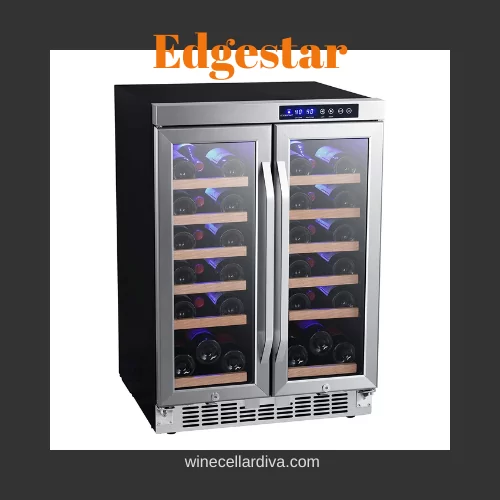
Edgestar CWR362FD Wine Cooler: Is it Worth Your Investment? Only the best wine connoisseurs know how to provide the utmost
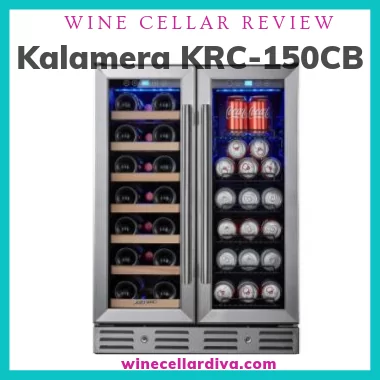
Welcome to the Wine Cellar Diva Review of the Mixed Beverage Wine Cooler. In this review I will inform you

New Air AWB-400DB Dual Zone Beverage Cooler Built-In Stainless Steel Refrigerator for Soda Beer or Wine Holds 22 Bottles and